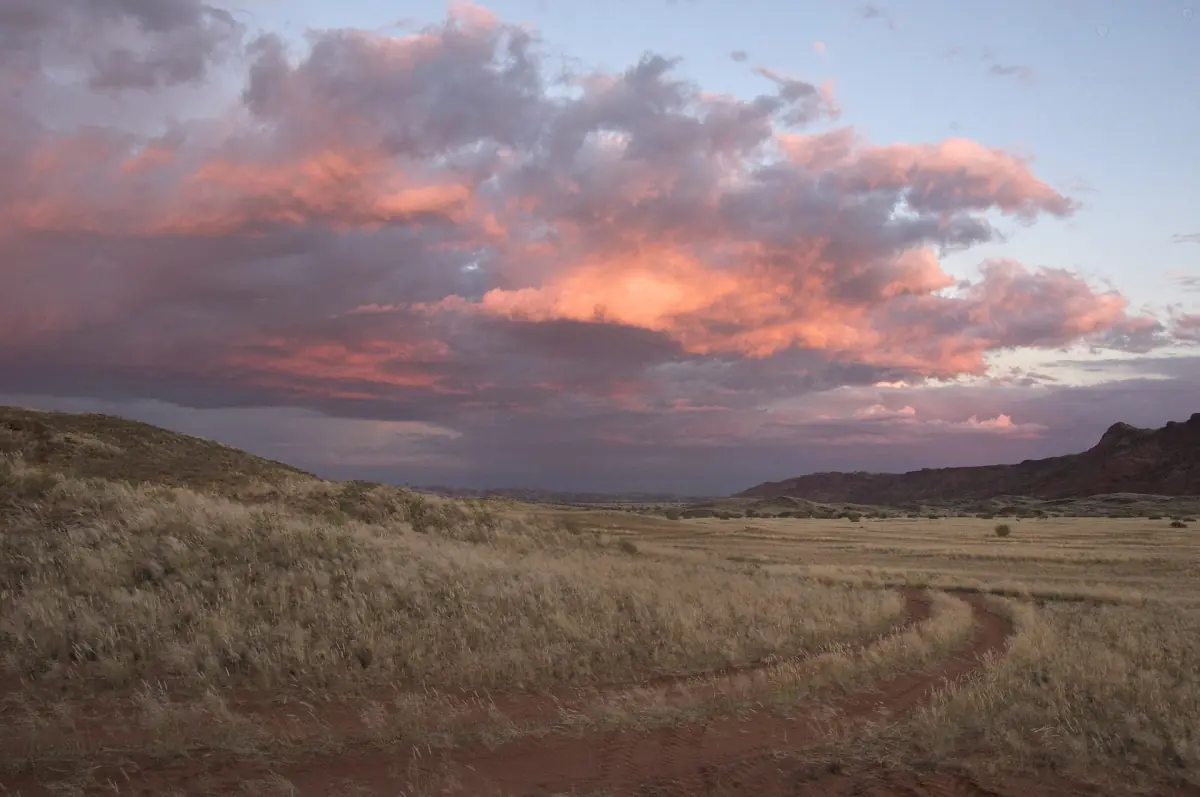
Namibia weather around Sossusvlei at a glance
Sossusvlei and Deadvlei lie in the Namib, a coastal desert with long dry spells and a big swing between day and night. Fog is an important source of water for the life in the dunes, but that does not mean fog at Sesriem on any given morning. Plan for sun, heat and a cool start, not for rain.
The weather shapes your day on the dunes. Heat decides how long you want to walk, and early starts are common. If you would rather not plan the drive and the walk yourself, see our page on Sossusvlei tours from Windhoek and Swakopmund.

The seasons in the Namib
Namibia's seasons run opposite to Europe and North America. Read these as broad patterns, not as a forecast for your dates.
November to April: hot, with the little rain there is
Average daily highs in the table below run from 30 to 33 °C, and March is the warmest month at 33.0 °C. January to April are also the wettest months in the table, with 3.3 to 6.7 mm on average.
May to August: cooler and dry
Highs fall to between 26 and 30 °C, and rain is close to zero. Nights are cold: the average low drops to 9 to 14 °C. Many visitors find these months easier for walking on dunes.
September and October: the heat returns
Highs climb from 27.0 °C in September to 28.6 °C in October and 31.2 °C in November. September has the coldest average nights of the year at 9.1 °C.
Rain, rivers and fire
Rain far upstream can still reach the dry Tsauchab river. In April 2026 water stood in the Sossusvlei pan. That is an exception, not a seasonal pattern. Fast-rising water in dry riverbeds and bush fires, especially in September and October, are the risks to plan for.
Our pick: a day trip that starts at 04:30
The early pickup puts you at the dunes in the first hours of the day; bring water either way.
Hand-picked tours, booked through GetYourGuide. Prices are indicative starting prices in US dollars (as of October 2026). Tap a tour for live availability and the current price in your currency.


Sossusvlei tours and day trips
Guided trips to Sossusvlei and Deadvlei from Windhoek and Swakopmund, with live prices and availability.
Namibia weather by month
Historical comparison values from the weather station at Gobabeb in the central Namib. Temperatures are averages of the daily highs and lows over 1976 to 1981, rain is the average over 17 to 18 years.
| Month | Average high | Average low | Rain |
|---|---|---|---|
| January | 30.9 °C | 14.6 °C | 5.5 mm |
| February | 30.4 °C | 16.1 °C | 4.6 mm |
| March | 33.0 °C | 16.5 °C | 6.7 mm |
| April | 32.6 °C | 15.9 °C | 3.3 mm |
| May | 29.6 °C | 13.6 °C | 0.3 mm |
| June | 27.5 °C | 12.3 °C | 1.6 mm |
| July | 26.6 °C | 10.6 °C | 1.1 mm |
| August | 26.1 °C | 9.2 °C | 1.7 mm |
| September | 27.0 °C | 9.1 °C | 1.1 mm |
| October | 28.6 °C | 9.9 °C | 0.5 mm |
| November | 31.2 °C | 11.8 °C | 0.6 mm |
| December | 30.1 °C | 13.7 °C | 0.4 mm |
Gobabeb is not Sesriem or Sossusvlei, so use the table to compare months, not to predict a single day. For most visitors who plan to climb dunes and walk to Deadvlei, the cooler and drier months from May to September are the easier choice. In the hot months, start early and carry more water.
Sossusvlei weather: mornings, midday and daylight
Mornings. Bring a warm layer for early starts, for example the meeting point for a balloon flight about one hour before sunrise. The monthly lows above are averages, not a guarantee for the hour you leave.
Midday. Carry drinking water on the walk to Deadvlei, because the heat is great. Fill your bottles before you set out, and plan the long walks for the cooler hours.
Daylight. Sunrise moves from about 06:00 in November and December to about 07:40 in July. Sunset runs from about 18:15 in June to about 19:50 in January. These are mid-month values, not gate times. See park fees and gate times for the entrance rules, and the best time to visit for how the seasons fit your plans.
Plan around the weather
Where to go next.

Best time to visit
Which months suit dunes, balloons, the coast and Etosha.

Hot air balloon flights
Sunrise starts, pauses and what the weather decides.

Where to stay
Inside or outside the gate, and why it matters in the early light.
Images – Best time to visit: Namib-Naukluft Sand Dunes (2011) · Detail of a photo by Yathin S Krishnappa · CC BY-SA 3.0; Hot air balloon flights: Ballooning, Swakopmund Namibia (3052369581) · Detail of a photo by Joachim Huber from Switzerland · CC BY-SA 2.0; Where to stay: Gemsbok sossusvlei · Detail of a photo by (WT-shared) Shaund at wts wikivoyage · CC BY-SA 3.0


Namibia weather: frequently asked questions
What is the weather like in Sossusvlei?
Dry, sunny and warm to hot in the day, with cool to cold nights. At the Gobabeb comparison station, average highs run from 26 to 33 °C and average lows from 9 to 16.5 °C across the year.
Does it rain in Sossusvlei?
Rarely. The Gobabeb comparison station averages 0.3 to 6.7 mm a month, with January to April the wettest months. Water reaches the Sossusvlei pan only after suitable heavy rain, so do not plan around it.
Which month is the hottest?
March, with an average high of 33.0 °C in the table, followed by April at 32.6 °C. November, January and February are close behind at 30 to 31 °C.
How cold are the mornings?
The coldest average lows are 9.1 °C in September and 9.2 °C in August. The warmest nights, in March, average 16.5 °C. Bring a warm layer for sunrise in any month.
Is the table data for Sossusvlei itself?
No. It comes from the station at Gobabeb, also in the central Namib, and covers past years. It is a useful way to compare months, not a forecast for the dunes.
What should I pack?
A warm layer for early starts, plenty of drinking water and a plan for the heat of midday. Check the weather on the days before you travel.